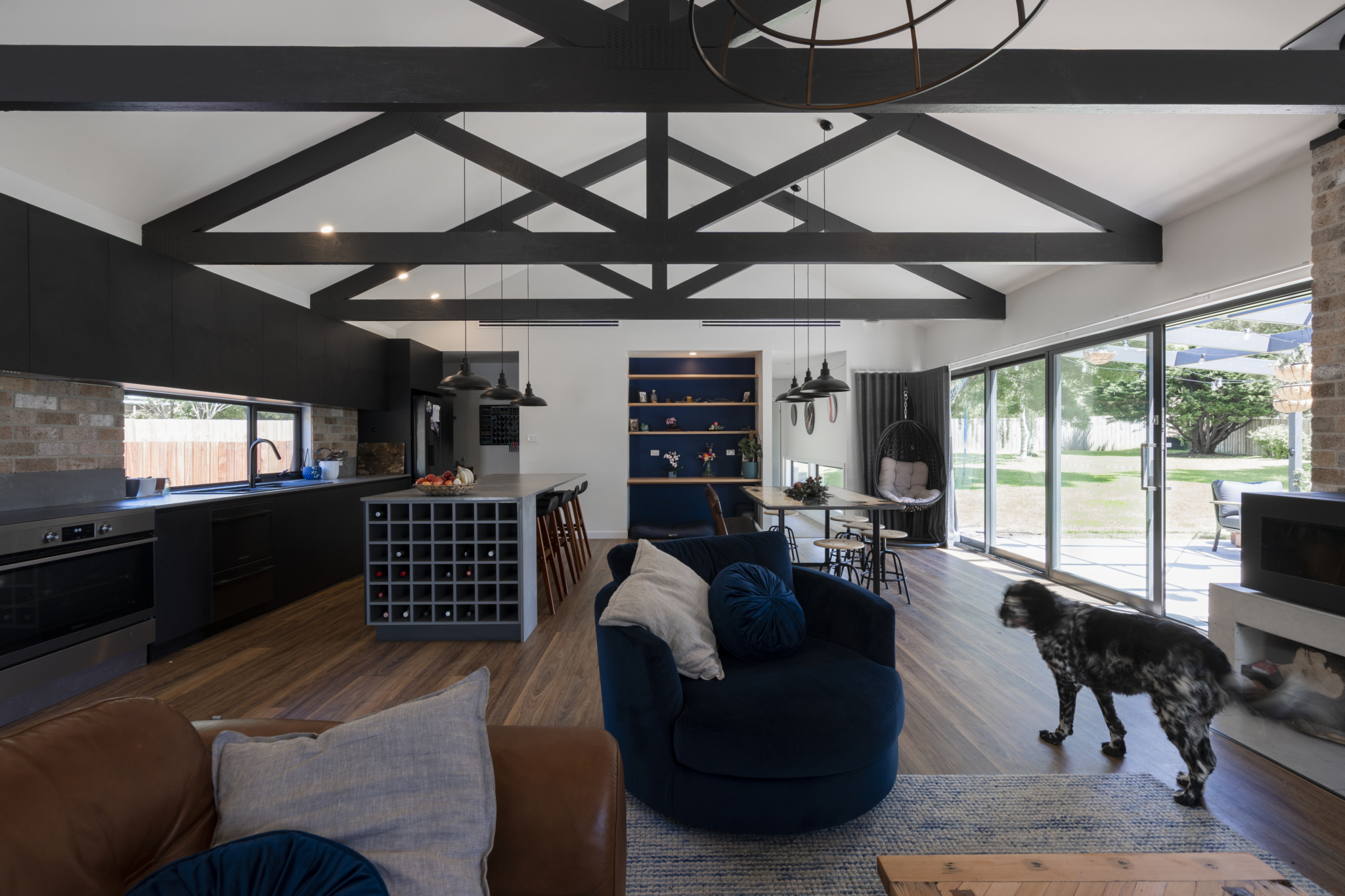
Standard ceiling height in Australia
Posted on: 23 Mar 2026
Thinking about a build or renovation?
You might be thinking this is a bit of a random topic, but when designing a home, ceiling height is one of the most influential, yet often underestimated, architectural decisions to make! It shapes how a space feels, performs, and really, (you guessed it) how you live in it.
Ceiling height doesn’t need to be a restriction. We see it as an opportunity to design your home for its climate and its site, and to create a home that genuinely works for the people living in it (you!).
So, if you’re in the process of thinking about building or renovating your home, keep reading as we answer some questions about ceiling heights and how we consider this when designing homes
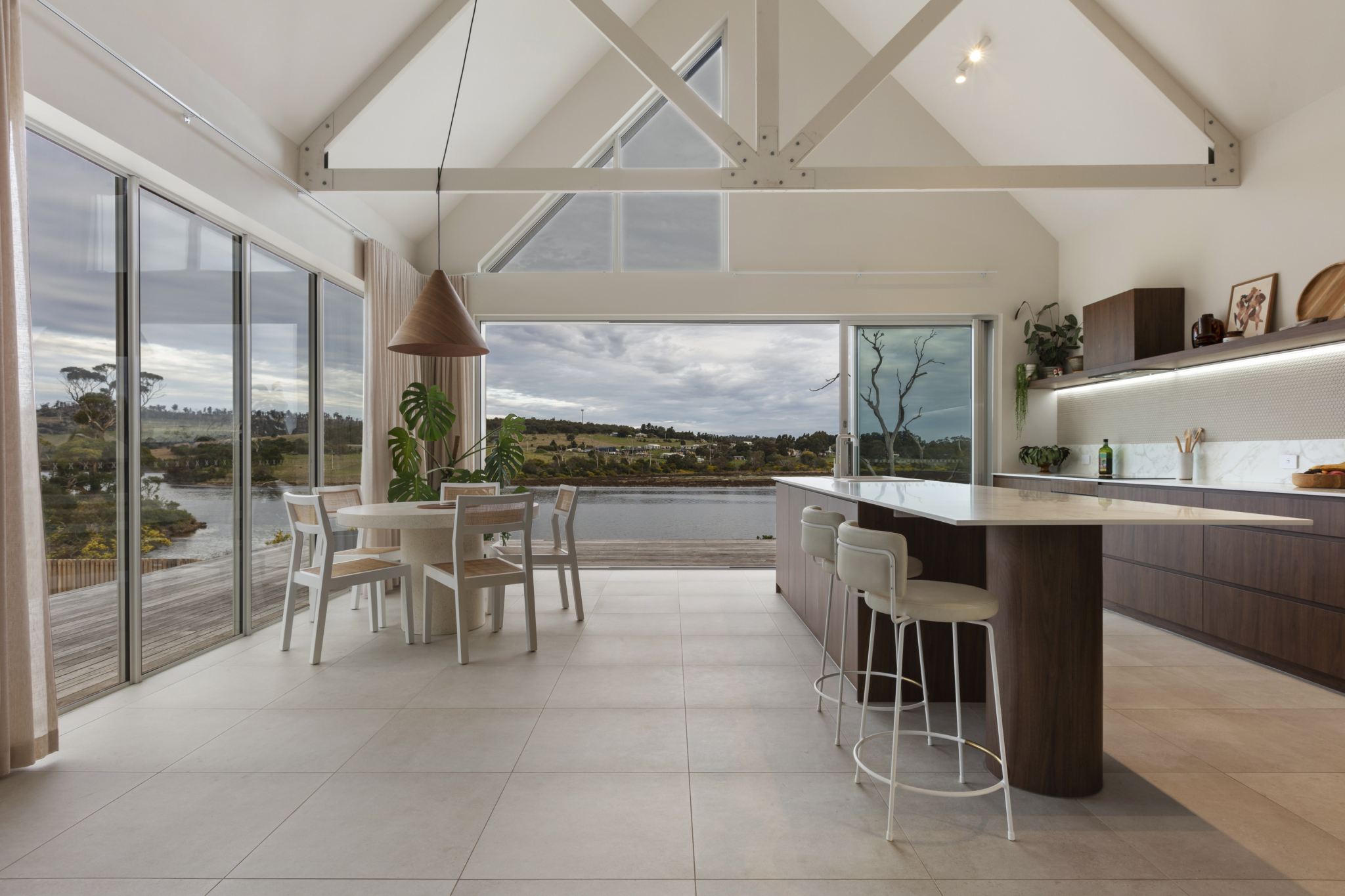
What is the standard ceiling height in Australia?
Across Australia, residential ceiling heights typically fall within these ranges:
- 2.4m – Traditional “standard” ceiling height
- 2.7m – Common in contemporary homes
- 3.0m+ – Feature or ‘grand’ spaces
- 2.2m – Minimum height for certain secondary spaces (e.g. basements)
2.4m ceiling height became standard due to construction efficiency and cost control. These days, however, many new builds actually lean toward 2.7m in main living areas to add a bit more character, and to enhance light, openness, and proportion.
What architects really consider (well, what ours do anyway)
Believe us when we tell you that ceiling height really changes how a home feels, performs and flows. Don’t believe us? Well, here’s what we’re actually thinking about behind the scenes:
Ceiling height impacts:
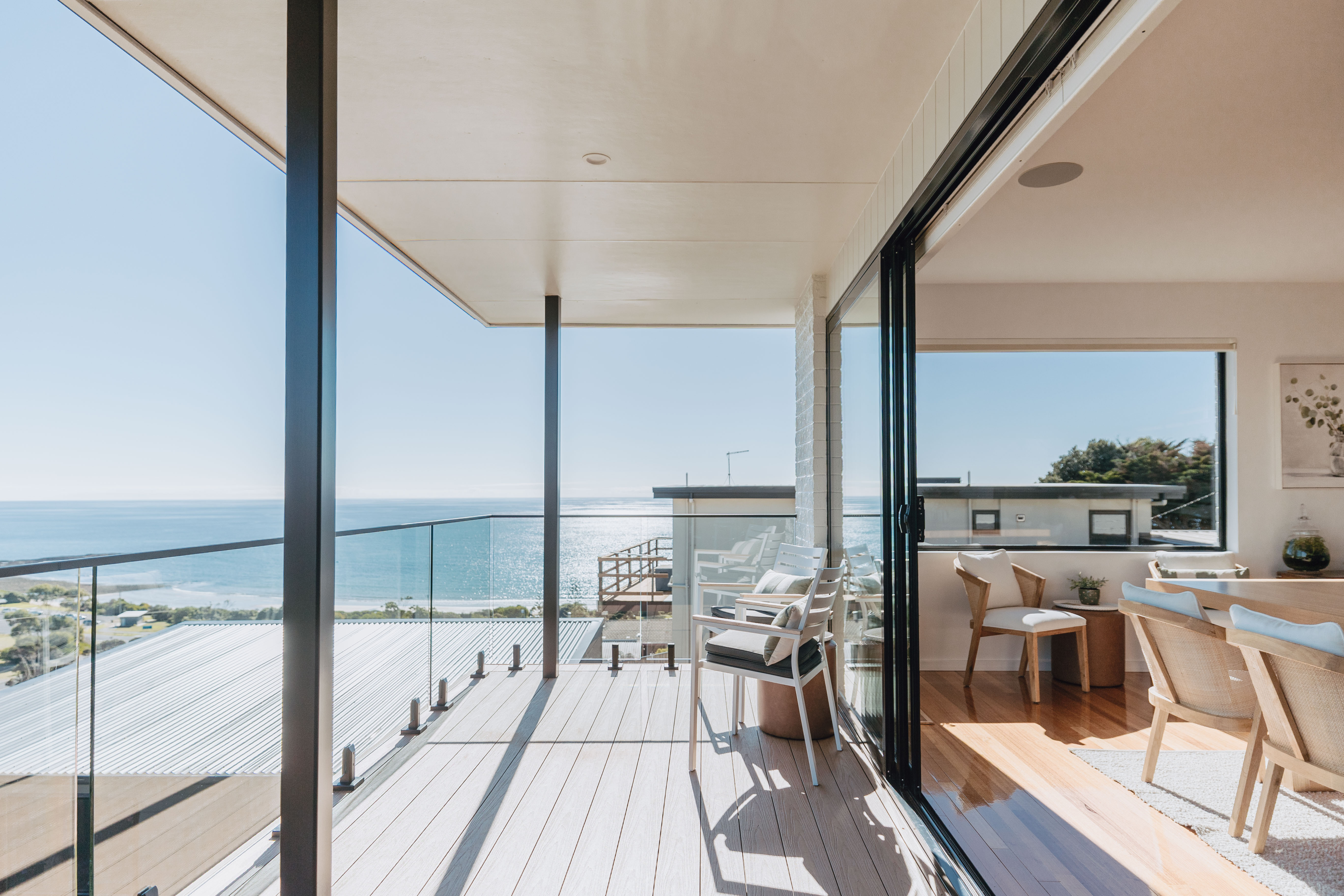
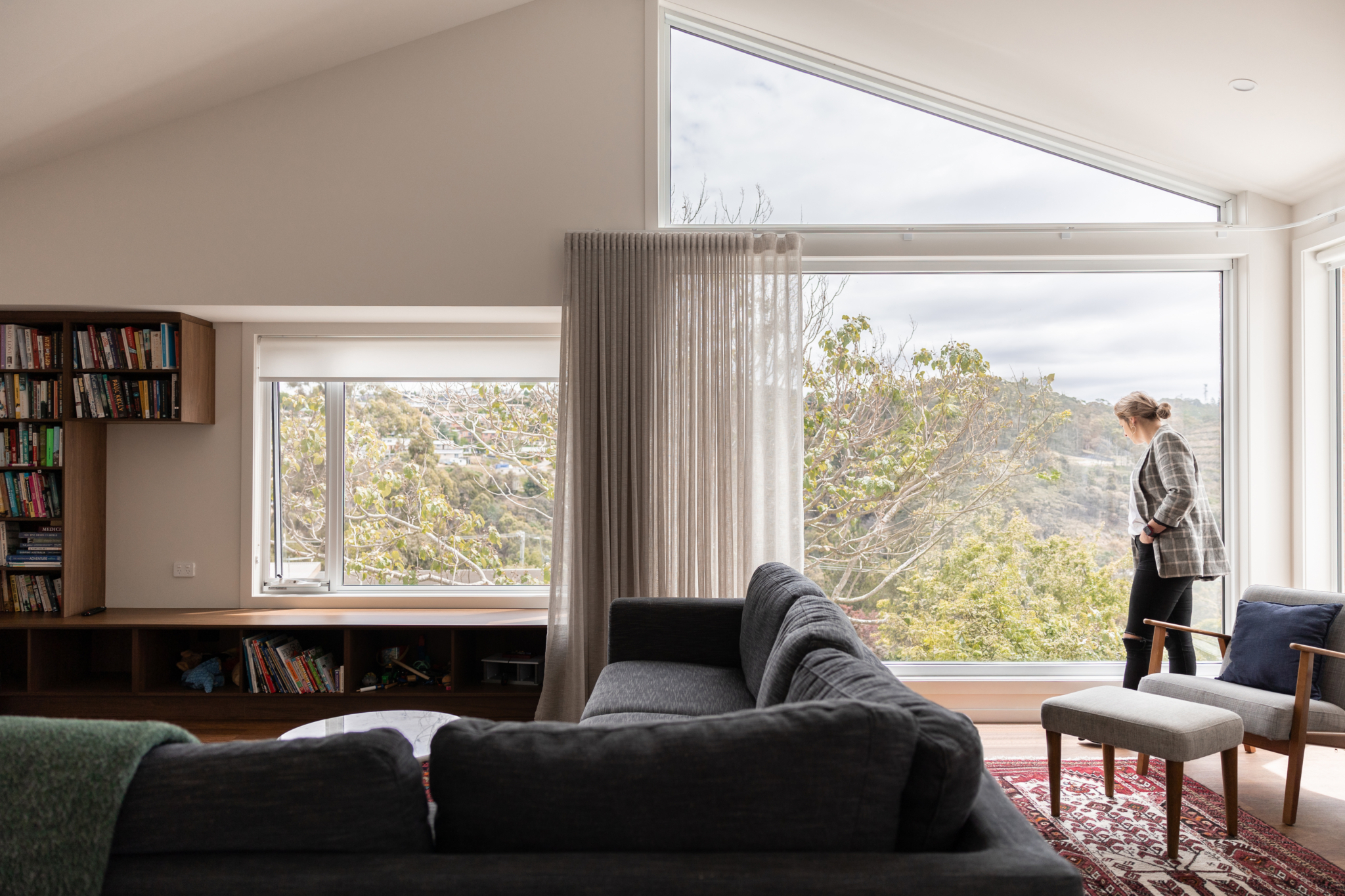
• Natural light – Higher ceilings allow for taller, larger windows and therefore, provide the opportunity for greater light to enter the room, reducing the need for artificial lighting.
• Heat performance – Volume directly affects heating and cooling loads. In Tasmania especially, we design ceiling heights alongside insulation, glazing and orientation, so the home feels comfortable year-round — not just during our short summers and looong winters.
• Spatial quality – Even an extra 300mm can completely shift the mood of a room. It can make a living area feel open and generous, or a bedroom feel calm and grounded. It’s subtle, but powerful.
• Proportion & detailing – Door heights, cabinetry, glazing and joinery all respond to ceiling scale. Get the proportions right and everything feels balanced. Get them wrong and something always feels slightly off.
• Acoustics – Increased height changes how sound travels. We consider this (alongside other material choices) in open-plan living areas, so the space feels open yet connected and without becoming echoey or harsh.
• Cost & constructability – Higher ceilings can mean structural changes, material adjustments and budget impacts. We weigh this up early in the design process, alongside your budget, so the design outcome still makes sense financially.
At the end of the day, it’s never just about going higher or bigger just for the sake of it. It’s about making smarter choices and maximising every millimetre to ensure the finished product works for how you live.
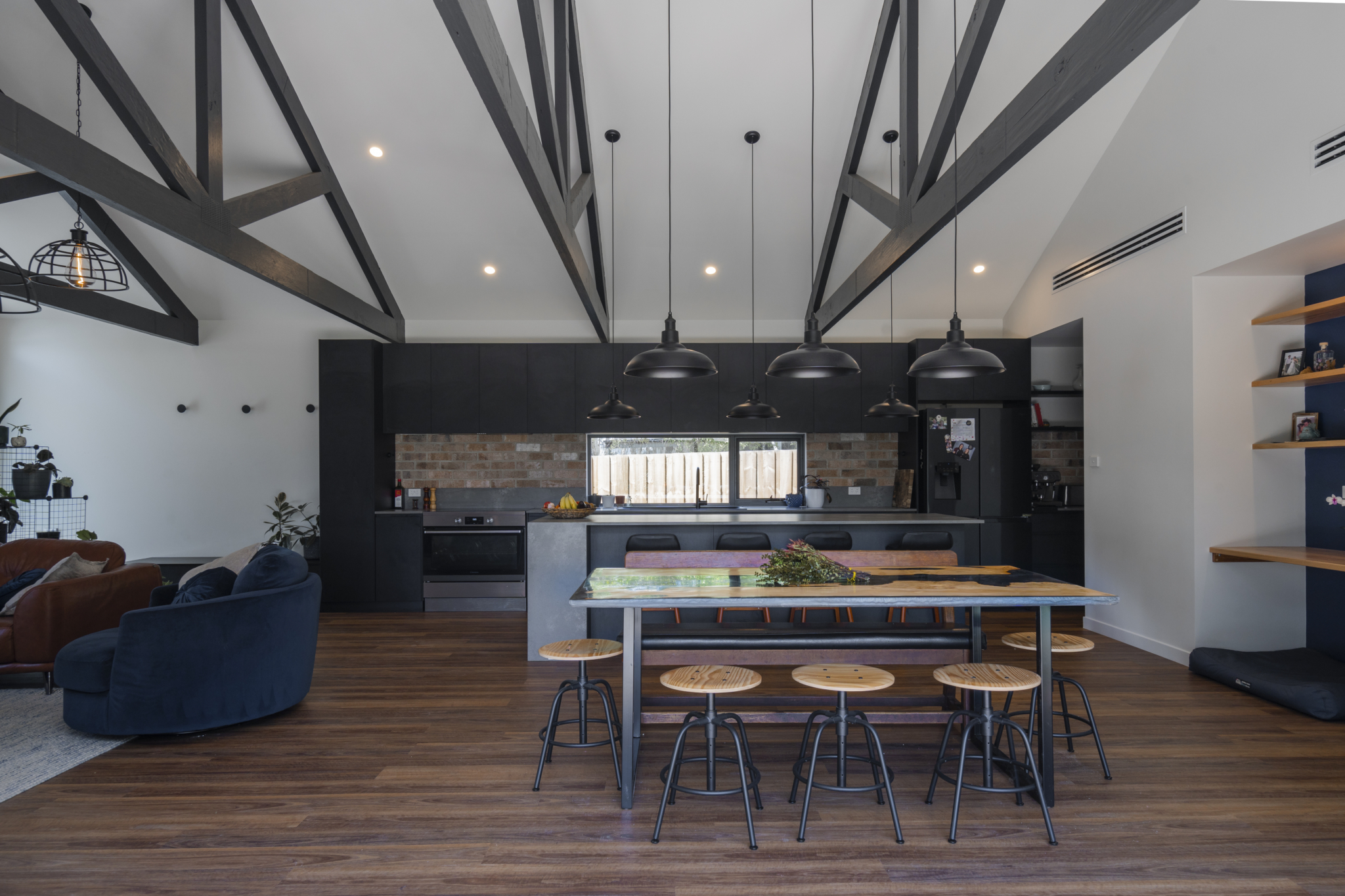
Here on our island home
In Tassie, as you know, we’ve got a cooler climate, so ceiling heights are carefully considered in every design we do.
Higher ceilings can feel generous and light-filled, particularly in north-facing living areas, but they also increase the volume of air that needs to be heated during winter. Makes sense, hey?
To avoid blowing out that energy bill, many contemporary Tasmanian homes aim for:
- 2.7m ceilings in living areas to capture natural light and enhance openness.
- Slightly moderated (lower) heights in bedrooms, to retain warmth and efficiency.
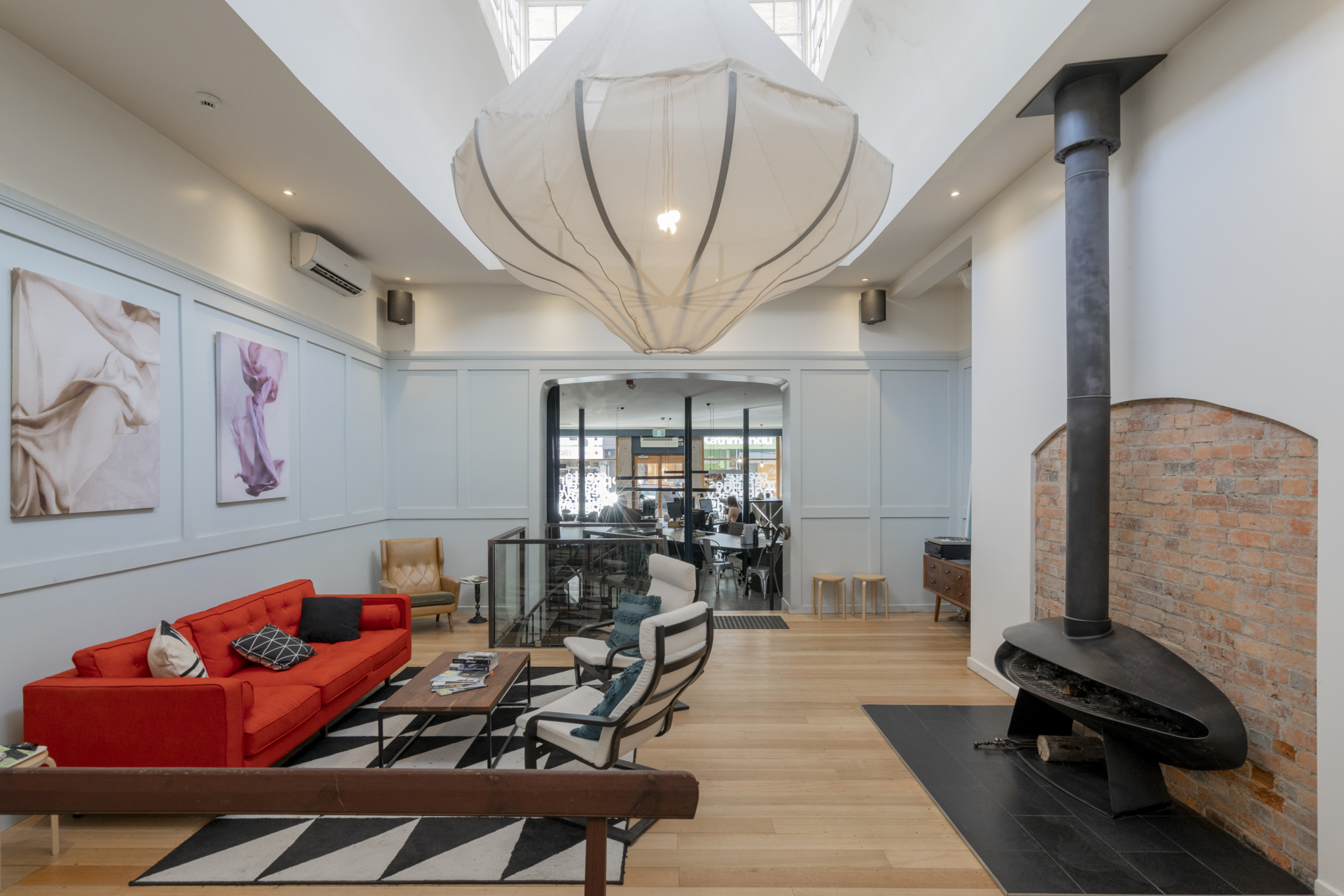
- 3m feature ceilings in entry or lounge spaces, for added effect, and to make a room more dramatic.
The key is pairing height with strong thermal performance — insulation, glazing selection, orientation and airtightness.
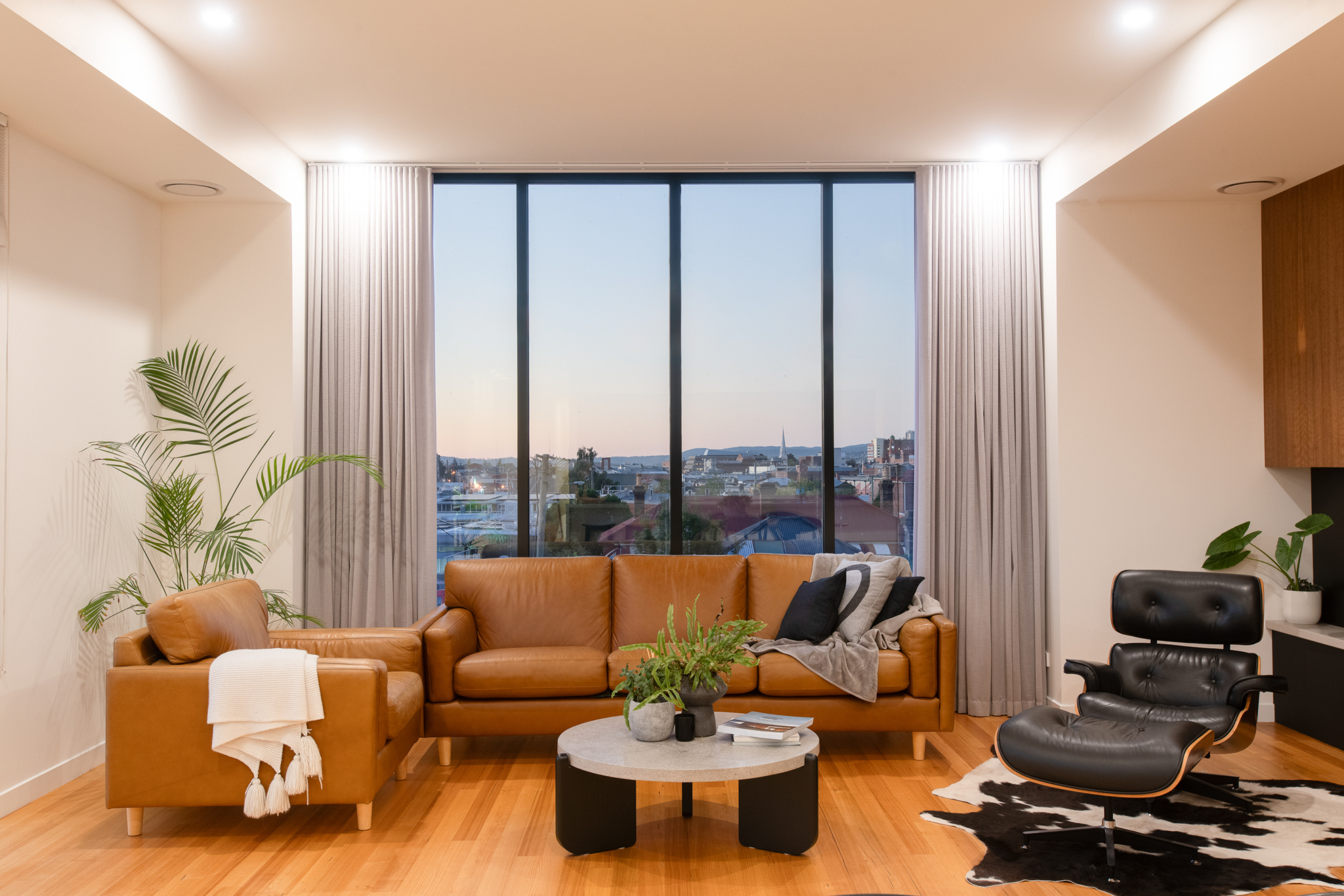
How we do it?
An S. Group home isn’t defined by a set ceiling height and certain style – it’s defined by intention (just like everything we do).
We work to Australian building standards, but more so, we design beyond minimum requirements to achieve the best possible outcome for you.
That might mean:
- Elevating ceilings in key living spaces to maximise light.
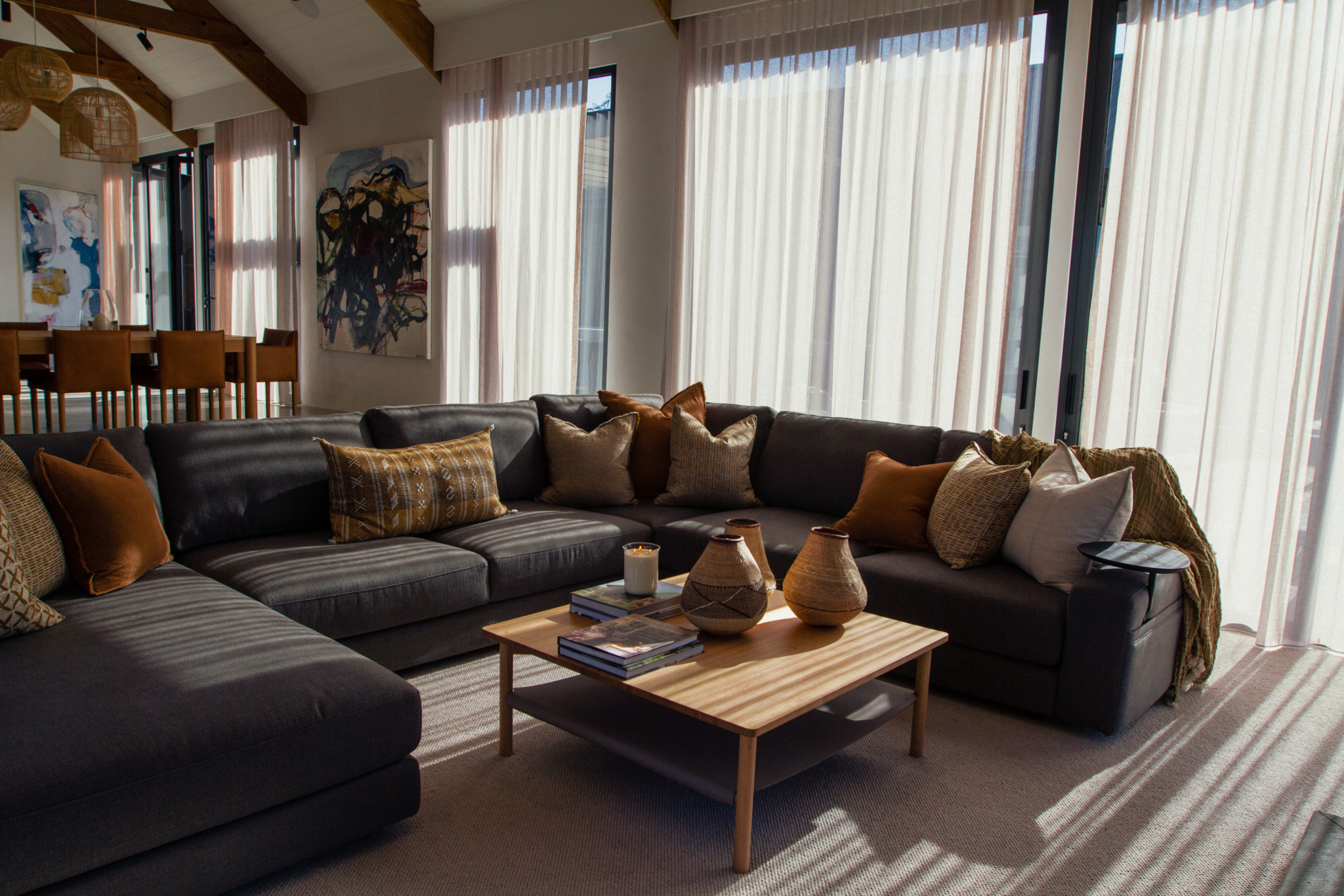
- Creating a raked or vaulted ceiling to add warmth or character.
- Maintaining efficient heights where performance and comfort matter most.
- Designing proportionally, so doors, windows and materials feel cohesive.
We don’t just design something for the sake of it.

So, what’s next?
Our architectural team approach every home (whether coastal, suburban, or rural Tasmanian) with the same philosophy: work to standard, design beyond expectation, and create spaces that feel right for the people living in them.
Because great architecture isn’t measured in millimetres – it’s measured in how it feels be in the space.
So, if you’re ready to design your S. Group home, let’s chat.
Book a free consult, grab your no-obligation design and budget, and if you’re
keen to progress – we’re ready to make it happen.